DevOps Compliance – Why You Need to Automate (2023)

Security is a crucial component in the development of any great software solution. It’s all about trust. If the customer doesn’t trust that their data is safe, then they won’t use the product. Compliance organizations and standards ensure that developers meet high standards of safety and security, but if any coding errors are missed in the development process then you have to retrace your steps and try to fix the problem. This creates significant delays in the development and release processes. A proper DevOps automation platform erases this slowdown. 

What is Compliance?

ADP defines compliance in business as, “ adherence to all local, state and federal jurisdictions that govern your operations.”

For context, the Health Insurance Portability and Accountability Act (HIPAA) and the General Data Protection Regulation (GDPR) are two examples of compliance standards you’ve probably heard of before. 

In software development, compliance is making sure that all code meets the standards set by governing organizations aiming to only allow secure and legal products to be on the market.

The Challenge

Compliance often prolongs release times. 

If the standards aren’t met at every step of the development process, teams will have to go back into their code, diagnose the error, and implement the solution.

This eats up a lot of hours that could instead be used for something like improving the user experience, running marketing campaigns, or hosting demos for potential clients.

How can this be avoided?

The Solution

Lots of teams have tackled this challenge by implementing Compliance Automation.

By automating compliance checks throughout the entire development process, errors are caught earlier. This way, the code can be corrected as it’s written, instead of after its been implemented for weeks or months. 

Simply put, problems are flagged by your automated system, so your team goes in and makes the correction, and the product can hit the shelves earlier because the error was fixed almost immediately. 

How Can DuploCloud Solve This Problem? 

DuploCloud is a “DevOps automation platform that accelerates time-to-market by translating high-level specifications into low-level details for fully managed cloud configurations.”

With out-of-the-box compliance controls for SOC 2, PCI-DSS, HIPAA, HITRUST, NIST, GDPR, and others, you can completely automate your DevOps Compliance processes, saving time and boosting efficiency.

Check out their demo page if you’re interested in learning how their solutions are succeeding in cloud infrastructure automation.

While meeting compliance standards can be a pain-in-the-neck, they do ensure that software is ready to be out in the real world and I definitely don’t see them disappearing anytime soon. So, you should be integrating compliance into your processes early on, so you can boost efficiency and bring your products to market faster.

The Bravado of Passion

We often operate in an authoritative mindset on topics that we have no business speaking on with such confidence. 

A prime example? Self-appointed sports commentators.

I have read a regrettable number of tweets and Instagram comments that shared strong, and often uninformed opinions on sports organizations, players, coaches, etc.

These comments are usually fiery, often insulting, and spewed from thrones of self-declared credibility. 

Most of these “analysts” have not spoken to anyone in the organization, yet somehow they know everything the GM is thinking. They haven’t interviewed players or studied their film, yet they know all there is to know about what’s wrong with a player’s mechanics. If a user like @joemama69 thinks that “player xyz” sucks and his career is over, then I guess someone better tell “xyz” to retire, right?

This, in my opinion, is a silly and low-importance problem. However, it points to a much broader concept: The Bravado of Passion. 

The Bravado of Passion is the false confidence that is built on the foundation of strong feelings. 

(Full disclosure: I just coined this term and I’m not even entirely sure it makes sense, but I like the way it sounds, so it’s staying)

Strong feelings do not give us the right to be an authority on a topic. Strong feelings may motivate us to become an authority on a topic, but they are not what qualifies us. 

So then, what makes a person an authority on a subject?

I will explore that in a later post 😁.

30 Day Blog Post Challenge (September 2023)

I’m challenging myself to write and publish 1 blog post a day for 30 days.

Why? Great question.

It’s important to me that I’m able to express my thoughts to others.

Not because I think my thoughts are special, but because I believe we were designed to be communicating with each other.

More specifically, I think it’s important to share the ideas that we aren’t sharing in conversation as frequently. What better way to embrace that than to write about them?

I’m also hoping this pushes me to read more, increases my appreciation for the little things, and gets me excited about building something great.

So, this post serves as a welcome message to anyone interested in joining me on this journey.

Let’s write.

Version Control for Beginners: The Ultimate Guide (2023)

Imagine this: You’ve spent weeks working on your team’s next salesforce app and one of your colleagues goes into a sandbox org to make some changes, but he didn’t realize that his changes would overwrite the ones you just made. Before you know it, all your changes are erased, and you’ve lost days, maybe weeks of progress. If you had been using a Version Control System (VCS), this disaster could have been easily avoided.

In this blog post, we will discover what version control is, what a VCS is, and how it changes the game for Salesforce DevOps.

What is Version Control?

According to Atlassian, version control is the “practice of tracking and managing changes to software code.”

It’s simple, really – it’s a way for software developers to never lose any state of their code. No one can accidentally delete someone else’s work, no one can permanently overwrite code, and progress is never lost.

What’s a VCS?

The VCS is the system that tells you who made a change and when they did it.

Instead of relying on complicated email threads, handwritten notes, or worse, the changes being stored in one team member’s noggin, a VCS keeps everything clearly organized and backs up all versions of the program, averting the crisis of destroying weeks of progress.

There are loads of different version control systems, but one that’s particularly effective is a git-based system. Git is easily the superior option for version control and I think it’s safe to say that 87.2% of developers would agree.

Version Control and Salesforce DevOps

So – what does this mean for salesforce developers and admins?

Salesforce DevOps teams are ideal candidates for implementing modern version control. Salesforce orgs can get especially complicated, making it all the more important to have a well-organized version control system to track code that teams are working on.

How can Blue Canvas help with Version Control?

Blue Canvas is a git-based tool that handles versioning, backups, and continuous integration for DevOps teams.

Their solution automatically syncs all of your team’s changes to a git repository, keeping track of all your salesforce metadata sandbox updates.

Here’s an example from bluecanvas.io of what pairing salesforce DevOps with a VCS looks like in action.

So, now you know what version control is, how version control systems work, and you learned a bit about how this all impacts salesforce DevOps. On top of that, you even heard a bit about a real-life application in bluecanvas.io. I think it’s safe to say that you’re no longer a newbie!

Commentary on Coaching Culture

Our culture has pushed the idea that kids should play sports no matter how poorly coaches perform or how poorly they treat their players.

This is nonsense.

We should absolutely be teaching kids to strive through adversity. We should absolutely teach them that there are hardships in life and you cannot simply quit.

However, the idea of enduring any and all things in a sport is not only kind of silly, but dangerous.

To insist that a child has to stick it out through anything and everything while apart of a sports team, is to also insist that the coach is always right, or has a bigger plan, or that he “knows better than you” so you just have to trust him.

Again, nonsense.

Coaches, and this may be a shocker, are mere humans. In fact, they are the same amount of human as each and every athlete that comes under their leadership.

So, when we tell children that their coach always knows what he’s doing, we are potentially sending the message that this person is perfect. Which is never true.

Often, coaches are wrong. They make mistakes, bad decisions, and justify actions and choices with faulty logic. Why? They are human. They are sinners, just like you and I, and we all need the saving grace that comes only through Jesus Christ.

I am sharing this not because I want to bash coaches, but because I want to share my concerns about the negative impact this mentality has had on so many of us.

I can speak first hand for my generation (that’s Gen-Z) and I can tell you that there are lots of people my age who have an unhealthy fear of people above them. Afraid to mess up. Terrified to disappoint. Incredibly worried about what might happen if they don’t do what their mom/dad/boss/friend/colleague/coach expects of them. This is not healthy. Nor is it fruitful.

So what happens as a result? Some accept it, and live their lives shaking in their boots all the time, trying their very best to please anyone and everyone.

Some reject it. They hate any kind of authority. They’re rude, disrespectful, and arrogant, and generally opposed to others.

So what happened to these people? A lying and deceitful fear crept in and seized power.

Both of these responses are versions of submission. Either way, the fear took control of their lives, the control just looks different for each.

Let’s not forget, this has also impacted coaches.

This isn’t a universal statement, but this lie has deleted the concept of accountability for many coaches.

Its given way to the growth of a false ego. This keeps coaches stagnant. They never improve.

This is such a disservice to coaches.

It’s also created separation between coaches and players. Often, players don’t know how to express concerns or healthy disagreement to their coaches because that’s not what’s been taught.

So what happens?

Coaches don’t improve. They aren’t humble. They can’t build true relationships with their players.

Under the guise of a pretend superiority, coaches remain unable to truly connect and improve because they aren’t able to be constructively criticized.

A leader who leads well, with confidence and sureness, but is also willing to be transparent, and open to communication, is an effective leader.

Now I know I’m new to this, and I’m admittedly not perfect at it, but when my wife expresses something that she believes I can do to love her better, I’m all ears.

Why? Because that is part of my life’s mission. If I can’t listen to my wife, how could we ever be successful as a unit?

If coaches can’t listen to their players, how could they be successful as a team?

If coaches can’t be steered in a better direction, how could they ever become a better coach?

Again, I am not promoting disrespect. I am merely suggesting that we create environments that improve the effectiveness of teams, and I believe this starts with a proper understanding of humility, respect for others, and awareness of where the line is drawn between adversity and ridiculous treatment.

Perhaps in another post, I will examine some tangible solutions to the problems I’ve noted, but for now, I think it simply looks like this:

“Understand this, my dear brothers and sisters: You must all be quick to listen, slow to speak, and slow to get angry.” (James 1:19)

A willingness to listen. A willingness to be humble, deny ourselves the pleasure of anger, and commit to improvement.

I am also not suggesting that I am an expert. I am open to disagreement, correction, debate, etc. So, please express any thoughts you might have on this, we may be able to learn something!

Also, please ask me about Jesus. This particular post isn’t biblically focused, but I am always willing to talk about who Jesus is, what He’s done, what the Bible says, why it’s relevant, why it’s true, why it’s good, etc.

Blessings to all.

I Dropped Out of College – Here’s Why:

“If breaking the mold was easy, there would be no mold to break.”

If you’re anything like me, college is probably too slow for you and if you’ve recently decided to drop out, life might feel pretty overwhelming right now.

I can assure you, it will get better. I found a path much more suitable for those of us who don’t fit the mold.

Here’s a bit of my story:

Background

Besides graduating high school through the pandemic, I had a typical “go to college” path laid out for me. I was in the top 10 of my class, planning to play college football, and felt generally excited for the classic “college social experience”. I held onto the belief that if I didn’t go to college, many people would have viewed me as a failure or as screwing up my future.

I went to a small liberal arts school in Pennsylvania to earn a degree in “applied economics” (for those of you that don’t know, that’s liberal arts for “business”).

In that year, I did well academically. I recorded a 3.6 cumulative GPA and made the dean’s list for both semesters. I made some friends, started a side hustle (see @gringofades on Instagram), and I learned a bit about living on my own.

All of that seems great on the surface, so I’m sure you’re wondering what it was that made me drop out.

Please, allow me to explain.

There were plenty of factors that led to my decision, but here’s the three biggest things that pushed me over the edge.

Indoctrination

Whether it was political, social, or COVID-19 related, the majority of professors and people I met in college did not encourage me to think differently than anyone else.

In fact, I often found that differing opinions and viewpoints were not welcome in classrooms or in more casual social settings outside of class. This is the complete opposite of what I expected from an environment that I wanted to challenge me and continue to open my mind.

Administration, professors, faculty, as well as students all showed me that there was a certain way to feel and think on campus.

I often found myself suppressing many of the ideas I had wanted to share for fear of backlash and judgement. This is no way to learn.

How could I take that into my career and create value? If I developed a habit of worrying about whether my ideas would be granted discussion, how could I grow as an individual?

Why would I subject myself to that kind of close-mindedness, let alone pay for it?

Aimless Learning

I wasn’t going to school to be a doctor or lawyer. I actually had no idea what I wanted to do. I had some basic ideas about things that might pique my interest, but I didn’t have a solid plan.

There’s nothing wrong with not knowing what you want to do with your life at 18, but I found it to be a poor early investment decision to spend $30,000 a year for 4+ years, only to remain uncertain of what kinds of skills and career paths actually excited me.

In reality, a four-year degree would not have produced any value for me as a professional because I wouldn’t have developed the skills and mindsets it takes to succeed in the workforce.

Party Culture

This one’s huge. Kids graduate high school and go berserk in college because, for many, they’re getting to experience their first dose of parentless freedom.

It’s an understandable reaction, but it goes on for far too long. I won’t tell anyone how to live, but I saw this in my own life. If I stayed in an environment that pushed partying all weekend, then it would have been rather difficult to grow and mature.

Most students go out all night Friday night, sleep all day on Saturday, go out all night Saturday night and sleep all day on Sunday. If done on a consistent basis, that’s roughly 36 consecutive hours just thrown away. Imagine what could be done with even 24 of those hours?

That type of mindset encourages trudging through the week to reach the end goal-a weekend of late nights and self-damaging activities. I couldn’t live like that for 4 years and I definitely couldn’t expect to create a valuable career for myself either in that kind of culture and environment.

A New Path

After deep thought and discussion with friends and family, I decided to pursue Praxis, a business-driven apprenticeship training program. It’s branded as a college alternative that guides young professionals (not exclusively though!) through training for the workforce and then helps with landing that first job. It lasts for a year and costs a fraction of the price of college tuition. After graduating from the program, “Praxians” maintain lifetime membership and access to a community and network of other alumni and business partners.

I’m currently in my 6th week of the program, and I’ve loved every second of it. It’s everything I thought it would be and more. As I continue to grow and learn as an individual, my excitement and eagerness to begin my career follow along!

The Path Less Traveled

I don’t belong on the path most traveled. I’m not claiming superiority, but I definitely think, learn, and work differently than most.

If you feel the same way, I strongly recommend that you don’t ignore that feeling. There are alternatives to formal education.

Apply to Praxis.

Pursue a trade.

Seek out a CEO to apprentice.

Work your tail off to earn enough to invest in real estate.

There are so many other paths.

Don’t be afraid to test them out.

I don’t fit the “mold” and I couldn’t be happier to break it.

How Blue Collar Jobs Have Become the Building Blocks for my Career

How Blue-Collar Jobs Have Become the Building Blocks of my Career

A typical truckload for WarrenRidge Landcare

Here’s a rundown of the value I found as a landscaper and how it has impacted my professional development.

Earning Every Dollar

Blue-collar work is typically hands-on physical labor. You do jobs that leave some dirt and/or grease on your clothes…well, everywhere else too.

It’s the kind of work that makes you feel like you’re really earning that paycheck, but it’s also the most rewarding work I’ve ever done.

Each day, I got to see the fruit of my labor, and that’s a feeling that can’t be replicated.

Digging Holes and Pulling Weeds

Recently, I worked for a company called WarrenRidge Landcare.

We focused on maintaining the quality and aesthetic of customer properties.

We did everything from pulling dead plants and replacing them with new ones, lawn fertilization, and even mailbox installations!

Life-long Skills

Work Ethic

My co-worker and I once dragged 6 300+ pound trees up a hill using a push-cart. Another time, we put 20 of those same kinds of trees in the ground in under 30 minutes.

That’s the kind of work ethic I developed while I was with the company. I did the nitty-gritty tasks. I’m not afraid to get my hands dirty and I don’t feel like any task to beneath me.

Blue-collar work teaches this kind of toughness and perseverance, and I know I can take that mentality into any company and be a valuable asset.

Patience

Physical labor can be aggravating if something isn’t cooperating.

When we were installing a mailbox at a customer’s house, we dug into a 4’x4’ block of concrete. It’s easy to throw a fit about that, but it doesn’t get the job done any faster.

I learned to be patient about these kinds of situations and to become surgical in the way I attacked the problem.

This kind of patience makes it much easier to work with others, tackle daunting tasks, and complete meticulous tasks.

Bonus Lesson

Warren-Ridge Landcare focuses its business on a very specific location in order to maximize profits.

The area we worked in is fairly affluent, and most of our customers were too busy to do any of their own yard work, or they lacked the skills to do some of the tasks we did for them.

We also saved a lot of money on transportation by not traveling far for jobs.

This business model taught me the importance of getting to know the kind of customer you want to target.

From Hydrangeas to Office Spaces

Blue-collar work is one of the best ways to prepare yourself for a successful career.

Some of the most successful people I’ve met started off by getting their hands dirty and I know my time spent in the blue-collar world will one day be a huge part of my story too.

How to Manage Stress and Avoid Burnout

How to Manage Stress and Avoid Burnout

Managing stress is essential if you want to avoid burnout, and I don’t mean the cool kind!

Stress & Burnout-What Are They?

Simply put, stress is the feeling of being overwhelmed by your responsibilities. It can be felt both physically and mentally and it can have a major damper on your life. If tasks feel too daunting to complete in a given timeline, that often causes stress. If you feel incapable of getting something done, that also causes stress.

If the stress persists, it may lead to burnout. WebMD describes it as “a form of exhaustion caused by constantly feeling swamped.”

Burnout is incredibly detrimental to your self-esteem, ability to function on a daily basis, and to your life in general. It’s usually caused by work, and it creates a perpetual cycle-work runs you down, then you’re too exhausted to accomplish anything, and then you can’t get anything done for work, which creates more stress and intensifies the burnout.

Strategies to Avoid Burnout

Burnout is common, especially in the workforce. However, it is possible to prevent burnout or at least minimize the possibility. The following sections are three ways that I’ve found to be beneficial in my struggles with stress and burnout.

Task and Time Management

Having an effective and organized task and time management system can make a world of difference. I use Trello to keep a list of my tasks, organized by how urgent each task is. It keeps me in tune with how much work I have left and it helps minimize the stress of not knowing what’s next.

I also use Google Calendar to keep track of what day I’m doing a particular task and to remember any events I have scheduled.

These services are available for free online, and they have both desktop and mobile apps.

Frequent Self Check-ups

It’s important to be aware of how you’re feeling and how you’re dealing with your responsibilities. Once a week, I set aside at least an hour to decompress and assess my ability to handle what’s on my plate. This is a personal thing, so what works for me may be completely different than what works for you. Use this time as an opportunity to ask for help, talk about what’s going on, and focus on maintaining your health and wellness.

Balance

This is the most important part! We have to have a good balance between all aspects of our life. If work is what causes you the most stress, then make sure you designate a specific amount of hours to work and follow that plan strictly. That way, you can fill the other hour with time for your family, friends, yourself, and everything else that matters to you! Remember we can’t give our best effort if we are burnt out.

Disaster Averted

Stress is normal. Most of the time, it’s unavoidable. However, our response to stress can make a huge difference in how it impacts our lives. Using the techniques I discussed earlier can be effective in avoiding burnout and saving you from a major hiccup in your career.

What I Learned About Operations as a Busboy

What I Learned About Operations as a Busboy

Here’s a picture of me working in the 22 West Tap & Grill kitchen back in 2018

Believe it or not, I learned a lot about business operations while working in a restaurant.

As an employee at 22 West, I started out as a busboy, then I was a food runner, and eventually I did anything from food prep to kitchen expediting.

After nearly 2.5 years of observation and experience, I learned a lot about what it takes to operate a business!

Essentials

Communication

No matter what level of business operations you work in, it is nearly impossible to succeed without excellent communication.

At 22 West, the owner and managerial team were great at communication. They used efficient tools and services to handle things like scheduling, payroll, and security. They were open with each other about problems in the restaurant, and they made sure to relay important information to us employees as well as listen to our concerns.

Without effective and efficient communication, that restaurant would not have been able to operate and the same can be said for any other company.

Organization Skills

For a restaurant, a well organized kitchen is a must-have. We had our spices and seasonings carefully arranged, a constantly cleaned prep area, and a walk-in fridge organized so well you could’ve mistaken it for a library (full of food instead of books, of course).

Organization skills came in clutch whenever it would get hectic during a lunch or dinner rush. If the kitchen was scattered, meals would’ve been forgotten or prepared incorrectly, co-workers would have gotten frustrated with each other (well, worse than they already were. It was hot in that kitchen!), and the business would not survive.

It is absolutely essential to keep your business organized if you have goals of success and prosperity.

Humility

Humility is possibly the most important tool for operations. We can’t always do everything ourselves, especially as a business grows, and it’s important to know when to delegate work to someone else.

During my time at 22 West, the owner and I grew very close. He would tell me about scheduling, payroll, security, and all sorts of stuff on the operations end. I discovered that he didn’t always muscle through it all or try to wear every hat in the company. He passed responsibilities to the managers. When things really took off, he hired a general manager to take over most of the day-to-day responsibilities.

We often let our pride get the best of us, thinking that we have to do things ourselves or it’s worth less. That’s never the case. Not only is there nothing wrong with receiving help, but it’s the intelligent decision nearly 100% of the time.

Conclusion

My seemingly small role at a local restaurant turned out to be one of my first major and insightful experiences with learning to run and operate a business. As I continue my career, as well as my life, it is imperative that I remember the lessons I learned through experiences like my time at 22 West Tap & Grill.

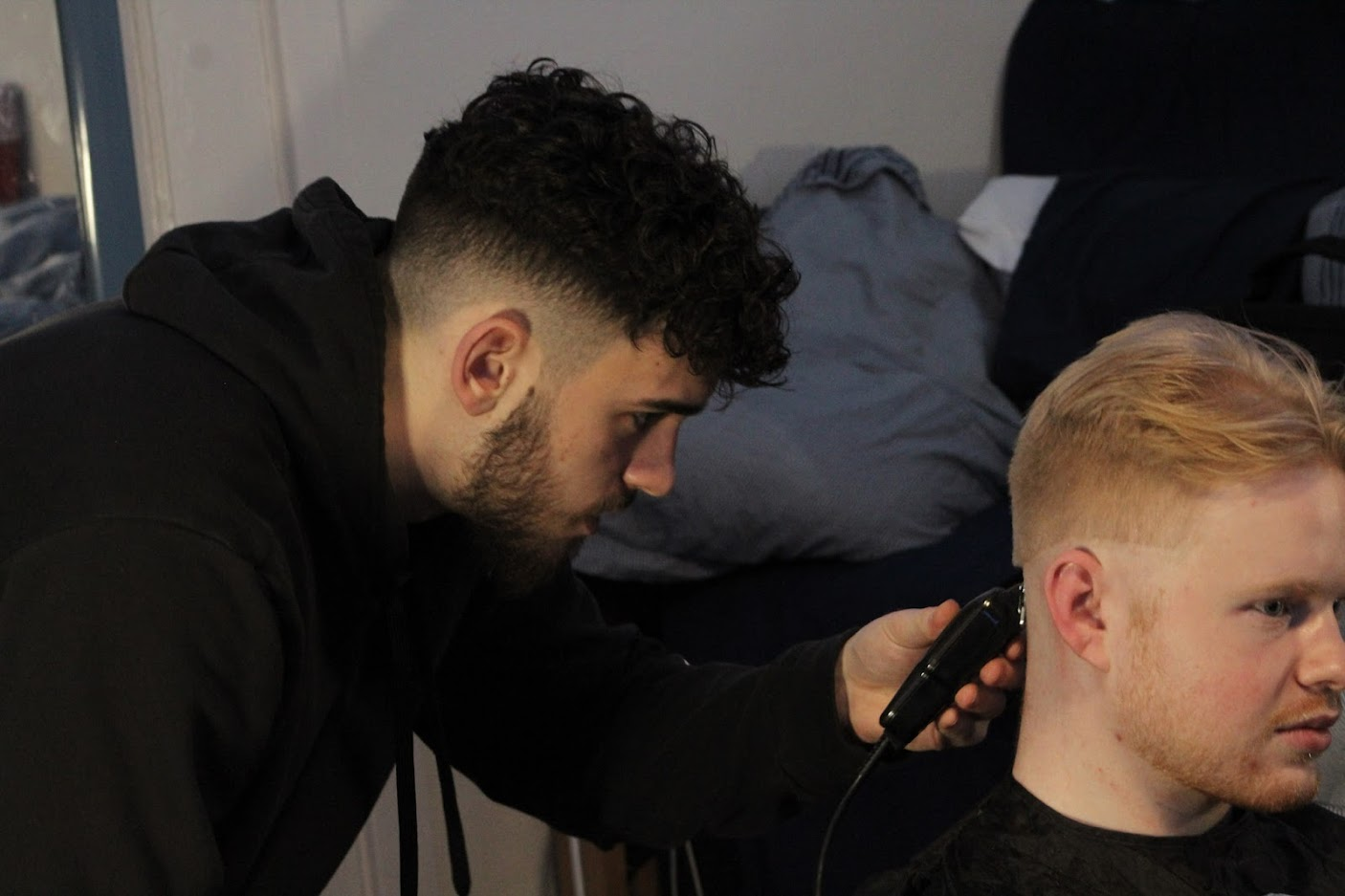
How I Learned to Market as a Dorm Room Barber

Once upon a time, I was a freshman in college running low on funds with a newfound skill: cutting hair. Little did I know this skill would become a business, but more importantly, a lesson in the impact of marketing.

The Inspiration

When I was still attending college, I experienced something special.

Simply put: my roommate needed a haircut and I offered to do it, he agreed, I went for it, and it was halfway decent.

From there, I started practicing on anyone who was willing,

I bought new equipment, and watched youtube videos for hours upon hours. I got to a point where I was giving out high-quality fades.

After I’d reached that point, I learned to market.

Marketing my Brand

My first marketing step was to come up with a clever name, gringofades. It came from my own barber, who knew I was getting into the barber game, as well as being a white kid who grew up with a ton of Hispanic friends that often called me “gringo”. It drew attention and sparked conversation – everything it was supposed to do.

Not long after, I made an Instagram page for my little dorm room business (@gringofades). The page was a portfolio to show off my work. But it was also a networking tool and a great way to communicate with clients, and the best part was, all of my friends and clients could share the posts on their pages.

For my business, word-of-mouth advertising proved to be massively effective. I told a friend, who told his roommate, who shared it with his teammates, and so on.

The whole operation essentially sold itself. Anyone living on campus need not go further than my dorm room to get a great haircut for a fraction of the price at a traditional barbershop. A lot of guys told me the cuts were better than the barbers in the area too! As gringofades gained popularity, the incentive to leave campus for a haircut lost its luster.

My marketing techniques paired with the nature of the business, proved to be very effective.

More of the Story

I had become well known around campus, and an entrepreneurship group sponsored by the college took notice. They invited me to compete in their campus version of Shark Tank. I agreed to move forward with them and went along with the program.

Long story short, I didn’t win the contest. The judges loved my pitch, but there was some convincing competition and they deserved the reward.

The winners were a group of young investors, with business ventures throughout the United States and even some in Africa! They listened to my pitch and loved my business. They reached out and offered me $5,000 to develop my business on campus.

You must want to know what that business looks like today and I’ll be honest, I did not accept that offer.

But wait! Hold off your disappointment! I declined because I decided that the college life was not a good fit for me.

I was accepted into a business-driven apprentice program called Praxis. After three months of training (bootcamp), I will begin a full time apprenticeship and embark on a brand new and exciting journey. I am currently in the first month of “bootcamp” and I can honestly say this is the greatest community I have ever been a part of.

Although, the whole thing played a vital role in my decision to take Praxis and run with it. I began to wonder: if my dorm room barbershop could attract the attention of a $5,000 investment, then imagine what I could do with more time, less distractions, and a tireless spirit. Praxis gives me all of that and more.

Final Thoughts

Marketing got my business to this point. Word-of-mouth advertising and a social media presence gave gringofades everything it needed to make a splash and gain support.

The experience I gained in running my “cut rate, cut right” barber shop taught me valuable lessons in all aspects of business, but specifically in marketing.

My little dorm room side hustle quickly grew to gain the attention of potential investors, and it sparked an entrepreneurial fire in me that isn’t going out anytime soon.